
A smelly litter box can make my clean home feel dirty. I scoop often, but odor returns. I need a safer and easier litter.
Yes, I can use rice husk as cat litter if it is made into a proper cat litter product. Processed rice husk cat litter is plant-based, low-dust, biodegradable, absorbent, and good at odor control[^1]. I would not use raw rice husk alone because it may not clump well.
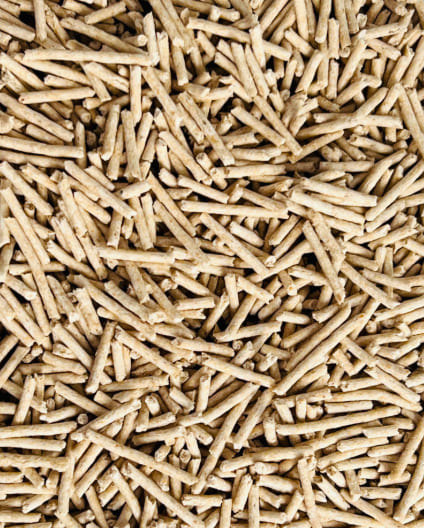
I first noticed rice husk cat litter when I was looking for a cleaner litter box solution. I wanted less dust in the air. I wanted less odor in the room. I also wanted a litter that felt safer for my cat’s paws and nose. Rice husk cat litter made sense to me because it uses natural plant-based materials such as rice husk fiber, corn starch, corn, and wheat. Some formulas also use enzyme deodorization technology, so they help control odor at the source. I do not see it as a magic product. I see it as a better daily tool when it is made well. The real question is simple. Does it make my home cleaner, my cat safer, and my cleaning routine easier?
Is Rice Husk Cat Litter Safe for Cats?
I worry when my cat digs, licks paws, or tracks litter outside the box. A bad litter can turn a daily habit into a health concern.
Rice husk cat litter is generally safe for cats[^2] when it is made as a finished cat litter product. It is usually plant-based, low-dust, and free from harmful chemicals[^3]. It is not cat food, but accidental contact is less worrying than many chemical-heavy litters.
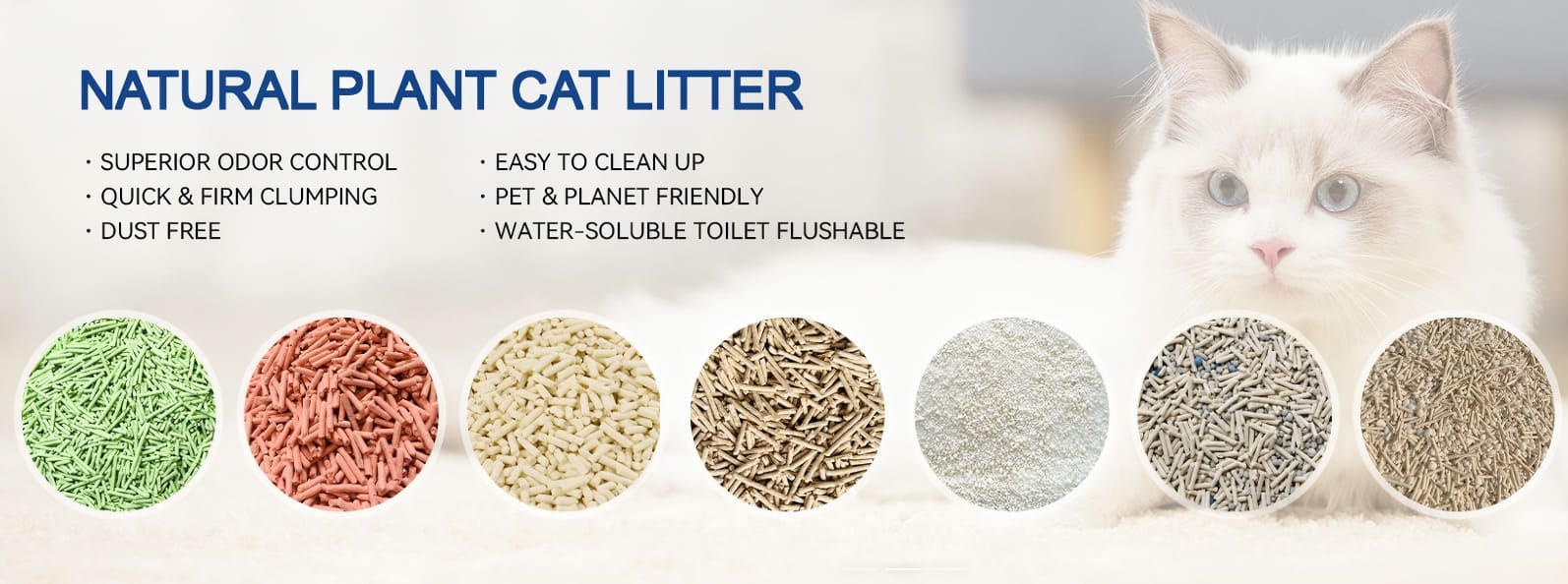
I do not accept the word “natural” too quickly. I still check the material, the dust level, the scent, and my cat’s reaction. Rice husk cat litter works well for me because it can be made from 100% natural plant-based materials. These materials can include rice husk fiber, corn starch, corn, and wheat. This type of formula does not need strong chemical perfume to smell clean. It can also be gentle on cats that dislike dusty litter.
I also think about paw licking. Cats clean their paws many times each day. If litter sticks to paws, my cat may swallow a small amount. A plant-based formula gives me more peace of mind, but I still do not want my cat to eat litter. If my cat keeps eating litter, I would ask a vet because that may show stress, hunger, or a health issue.
| Safety Point | What I Look For | Why It Matters to Me |
|---|---|---|
| Raw material | Rice husk fiber, corn starch, corn, wheat | I prefer plant-based ingredients |
| Dust level | Extremely low dust | I want to protect sensitive cats |
| Chemicals | No harmful chemical additives | I want safer daily contact |
| Scent | Light natural odor control | I avoid strong artificial perfume |
| Cat reaction | Normal digging and no coughing | I trust my cat’s behavior first |
For me, the key point is clear. I would use processed rice husk cat litter. I would not use loose raw rice husk from a farm bag. A finished cat litter product is designed for absorption, clumping, odor control, and cleaning. Raw rice husk may be too loose and too light. It may not lock liquid well. It may also create more mess around the litter box.
How Does Rice Husk Cat Litter Control Odor?
Odor is the reason many cat owners change litter again and again. I know perfume can smell nice at first, but urine odor still returns.
Rice husk cat litter controls odor through natural grain absorption and enzyme deodorization technology. Plant fibers help lock in moisture, and enzymes help reduce odor sources. This gives longer-lasting odor control without relying only on heavy artificial fragrance.
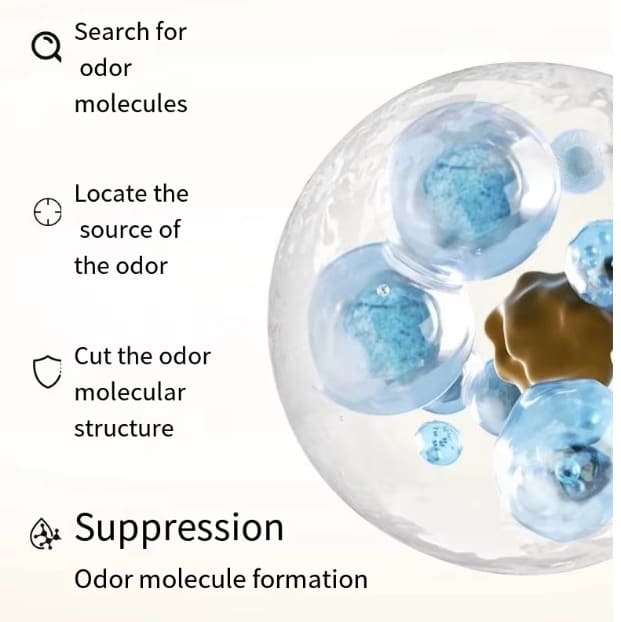
I do not want litter that only smells strong. I want litter that deals with the source of odor. Grain cat litter can help because grains naturally lock in moisture and odor for a longer time. Rice husk fiber and other grain materials can absorb liquid quickly. When liquid is controlled, odor has less chance to spread through the room.
Some rice husk cat litter also uses patented enzyme deodorization technology. I like this idea because enzymes work on the odor source. They do not only cover the smell with perfume. This matters more in a small apartment. It also matters in warm weather, because odor can build faster. In my own cleaning routine, I still scoop every day. No litter can replace good habits. But a litter with real deodorization makes daily cleaning feel easier.
| Odor Problem | What Rice Husk Litter Does | What I Notice at Home |
|---|---|---|
| Fresh urine smell | Absorbs liquid fast | I notice less sharp odor |
| Lingering box smell | Grains lock in odor | The room feels cleaner |
| Waste smell | Enzyme deodorization helps reduce odor source | I need less perfume |
| Strong artificial scent | Uses natural odor control | My cat seems less bothered |
| Daily cleaning stress | Forms removable clumps | I clean faster |
I also pay attention to the smell after several hours. Some litters smell fine only when they are new. A better litter should still control odor after my cat uses the box. That is why I see odor control as a mix of material, absorption, clumping, and daily scooping. Rice husk cat litter can perform well when all these parts work together.
Does Rice Husk Cat Litter Absorb and Clump Well?
Wet litter that breaks apart makes the box dirty again. I dislike soft clumps because they leave small pieces behind and bring odor back.
Good rice husk cat litter can absorb more than 120% water and form tight clumps. The sponge-like absorption helps pull in liquid fast. The hard clumping makes scooping easier and helps keep the litter box cleaner for longer.
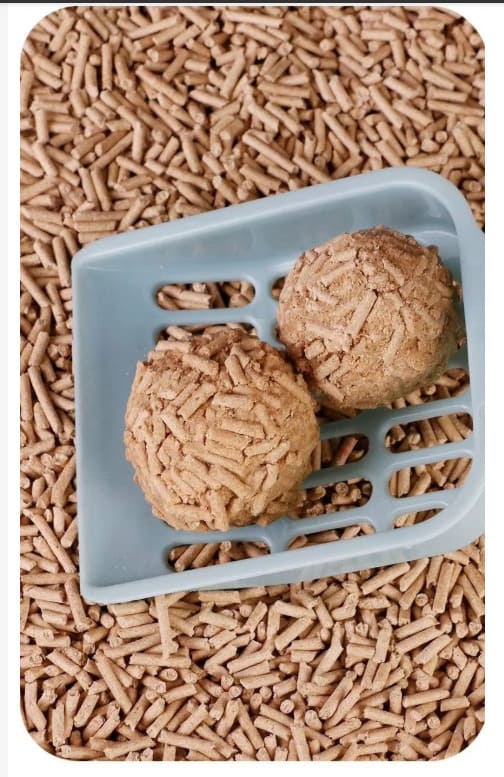
I judge litter by what happens after my cat urinates. If the liquid spreads across the tray, I know the litter is not good enough for my home. If the clump breaks when I scoop, cleaning becomes annoying. A good rice husk cat litter should absorb fast and hold together well. Some formulas can reach more than 120% water absorption. I see this as a sponge-like effect. The litter pulls in liquid quickly and keeps the wet part more controlled.
Tight clumping also helps reduce waste. When the clump stays hard, I remove only the dirty part. I do not throw away too much clean litter. This can make each bag last longer. It also helps the litter box stay fresher between full changes.
| Performance Feature | What I Want | Why I Care |
|---|---|---|
| Water absorption | More than 120% absorption | Liquid gets locked in fast |
| Clump shape | Tight and firm | Scooping feels easier |
| Clump strength | Hard knot that does not fall apart | The box stays cleaner |
| Bottom sticking | Less sticky wet mass | I spend less time scraping |
| Litter waste | Remove dirty parts only | I use each bag longer |
I also learned that litter depth matters. Plant-based litter can work well, but it needs enough depth in the tray. If I pour too little litter, urine can reach the bottom too fast. Then the clump may stick to the tray and break. I usually keep a proper layer so the litter can absorb from all sides. This small habit makes the whole product perform better.
Is Rice Husk Cat Litter Better Than Tofu Cat Litter?
Tofu litter is popular, so I understand why many cat owners compare it with rice husk litter. Both are plant-based, but they do not feel the same.
Rice husk cat litter can be better for low dust, fast absorption, tight clumping, and natural odor locking[^4]. Tofu cat litter is also safe and absorbent, but some types dissolve more slowly and may form softer clumps.
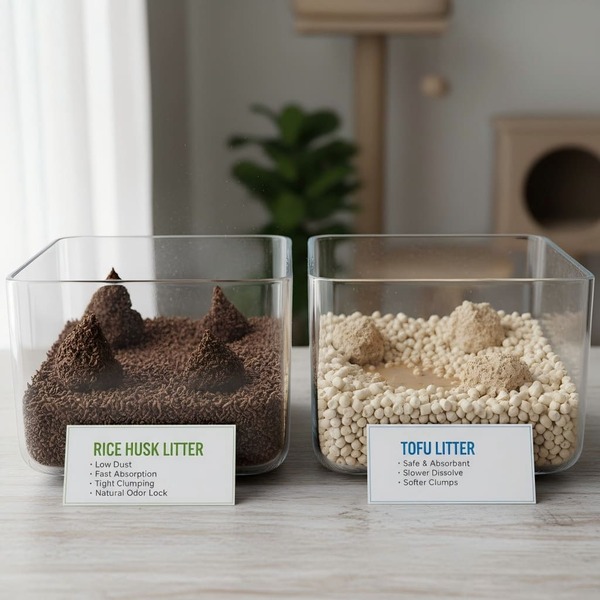
I do not think tofu litter is bad. I have seen many good tofu cat litter products. But rice husk cat litter can be a strong choice when I want a dry, low-dust, and easy-cleaning litter. Rice husk litter often uses natural grains such as corn, wheat, and rice husk. Tofu litter usually uses soybean residue or tofu residue. Both use renewable plant materials. So both can be better than many traditional mineral litters for people who care about the environment.
The difference appears in the details. Rice husk cat litter can absorb quickly and form tight clumps. Tofu litter can also absorb well, but some formulas form softer or fluffier clumps. Rice husk litter can also be extremely low dust, which helps sensitive cats. I also care about cleaning convenience. Some rice husk formulas are flushable[^5] and easy to clean. Some tofu litters are also flushable, but they may dissolve slowly.
| Item | Rice Husk Cat Litter | Tofu Cat Litter |
|---|---|---|
| Raw materials | Natural grains such as corn, wheat, and rice husk | Plant fiber such as soybean residue |
| Absorption and clumping | Fast water absorption and tight clumping | Strong absorption with even, fluffy clumping |
| Odor control | Grains naturally lock in odors for a longer time | Green tea, activated charcoal, or other additives may help |
| Dust control | Extremely low dust, suitable for sensitive cats | Most are low dust, but some may contain a small amount of powder |
| Convenience | Flushable and easy to clean | Flushable, but some types dissolve slowly |
| Eco friendliness | Biodegradable and uses agricultural by-products | Biodegradable and uses renewable raw materials |
I still check local rules before flushing any litter. Some cities do not recommend flushing cat waste. Some homes also have old pipes. When I am unsure, I scoop into a waste bag. The best litter is not only the one with the best label. The best litter is the one that fits my cat, my home, and my cleaning habits.
Is Rice Husk Cat Litter Better for the Environment?
Many litters work well, but they create heavy waste. I want a cleaner home, but I also want a more responsible choice.
Rice husk cat litter can be better for the environment because it is biodegradable and uses agricultural by-products[^6]. It turns plant-based materials into a useful cat care product and reduces the need for non-renewable mineral litter[^7].
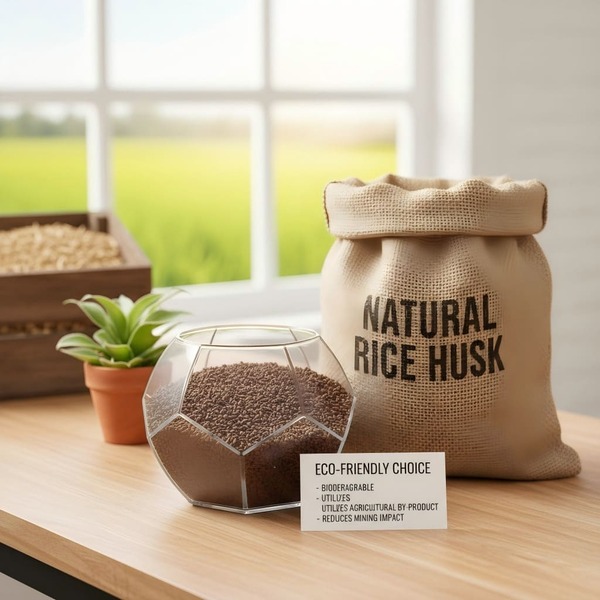
I like rice husk cat litter because it gives value to materials that already come from agriculture. Rice husk is a by-product of rice processing. When it is used in cat litter, it becomes part of a cleaner use cycle. This does not mean the product has no environmental cost. It still needs processing, packing, and shipping. But the raw material story feels more responsible than digging heavy mineral litter from the earth.
Biodegradability is another reason I pay attention to this category. Plant-based litter can break down more naturally than many traditional litters. This is useful for buyers who want an eco-friendly option. It also supports a softer image for pet brands that care about sustainability. For me, the best eco litter still needs to work well. If it does not absorb, clump, or control odor, I will use more of it. Then the environmental benefit becomes weaker.
| Eco Factor | Rice Husk Cat Litter Advantage | My View |
|---|---|---|
| Material source | Uses agricultural by-products | It makes better use of plant waste |
| Biodegradability | Plant-based and biodegradable | It feels more responsible |
| Weight | Often lighter than mineral litter | It can be easier to carry |
| Dust | Extremely low dust in good formulas | It improves the home environment |
| Daily waste | Tight clumps reduce wasted clean litter | I throw away less litter |
I see rice husk cat litter as a practical eco choice, not only a marketing idea. It gives me safety, odor control, clumping, and a better material story in one product. That is why I would consider it for homes, pet shops, and brands that want a natural cat litter line.
Conclusion
I can use processed rice husk cat litter. I like it because it is natural, low-dust, absorbent, deodorizing, and easier to clean.
[^1]: "Best Cat Litter Near Me Alternatives For Pet Sitters - DID YOU KNOW!", https://vcl.ischool.umd.edu/best-cat-litter-near-me-alternatives-for-pet-sitters. Comparative reviews of cat litter materials and veterinary guidance can support the characterization of plant-based litters as lower-dust and biodegradable than many mineral litters, while odor control and absorbency depend on formulation rather than plant origin alone. Evidence role: general_support; source type: institution. Supports: Processed rice husk cat litter is plant-based, low-dust, biodegradable, absorbent, and good at odor control.. Scope note: This supports the general properties of plant-based litter categories, not every rice husk product specifically. [^2]: "Feline Asthma: A Risky Business for Many Cats", https://www.vet.cornell.edu/departments-centers-and-institutes/cornell-feline-health-center/health-information/feline-health-topics/feline-asthma-risky-business-many-cats. Veterinary and animal welfare sources can provide general safety criteria for cat litter, including the importance of low dust, avoidance of irritants, and monitoring for ingestion or respiratory sensitivity. Evidence role: expert_consensus; source type: institution. Supports: Rice husk cat litter is generally safe for cats when it is made as a finished cat litter product.. Scope note: Such sources usually address litter safety principles broadly and may not evaluate rice husk litter as a distinct category. [^3]: "Rice Husk Research: From Environmental Pollutant to a Promising ...", https://pmc.ncbi.nlm.nih.gov/articles/PMC8348607/. A neutral source would need to document typical composition standards or contaminant testing for finished plant-based cat litter products; absent such data, the claim should be supported only as a product-specific manufacturing attribute. Evidence role: general_support; source type: research. Supports: It is usually plant-based, low-dust, and free from harmful chemicals.. Scope note: This claim is difficult to substantiate for an entire category because chemical composition varies by brand and additives. [^4]: "The Ultimate Guide To Different Types of Cat Litter - Tuft & Paw", https://www.tuftandpaw.com/blogs/cat-guides/the-ultimate-guide-to-different-types-of-cat-litter?srsltid=AfmBOorhC17knttwTVZELBMJlN9aDwetXNguIQW9CRfr4HBPz6jJBqVB. A neutral comparative source would need to report side-by-side performance testing of plant-based litters on dust, absorbency, clump integrity, and odor control to support this superiority claim. Evidence role: general_support; source type: research. Supports: Rice husk cat litter can be better for low dust, fast absorption, tight clumping, and natural odor locking.. Scope note: Without standardized comparative testing, this remains a conditional or anecdotal comparison rather than a general fact. [^5]: "What you can (and can't) flush | Portland.gov", https://www.portland.gov/bes/safe-flush. Municipal wastewater agencies and plumbing guidance can document that flushability claims for pet waste products are conditional and that many authorities discourage flushing cat litter or feces because of sewer, septic, and pathogen concerns. Evidence role: expert_consensus; source type: government. Supports: Some rice husk formulas are flushable and easy to clean.. Scope note: This evidence can contextualize the claim but does not validate that a specific rice husk formula is safe to flush in every plumbing or municipal system. [^6]: "Literature Review on the Utilization of Rice Husks - PMC", https://pmc.ncbi.nlm.nih.gov/articles/PMC10456955/. Agricultural and environmental sources can support that rice husk is a by-product of rice milling and that lignocellulosic plant residues are biodegradable under suitable conditions. Evidence role: definition; source type: government. Supports: Rice husk cat litter can be better for the environment because it is biodegradable and uses agricultural by-products.. Scope note: Biodegradability depends on disposal conditions; landfill behavior may differ from industrial composting or laboratory biodegradation tests. [^7]: "Bentonite - Wikipedia", https://en.wikipedia.org/wiki/Bentonite. Environmental references on cat litter materials can support that conventional clay litters are mineral products derived from mined, non-renewable resources such as bentonite, providing context for substitution claims. Evidence role: historical_context; source type: encyclopedia. Supports: It turns plant-based materials into a useful cat care product and reduces the need for non-renewable mineral litter.. Scope note: This supports the non-renewable nature of mineral litter inputs, but it does not quantify the net environmental benefit of switching without life-cycle assessment data.